
- (03) 5909 8218
- enquiry@fusionweld.com.au
Compressed Hydrogen Storage Vessels: Material Selection, Design & Australian Standards
December 02, 2025
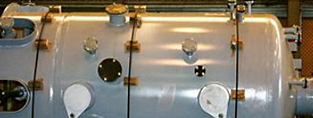
Fusion Weld designs and fabricates compressed hydrogen storage vessels in Australia, ensuring material quality and compliance with Australian Standards.
Compressed hydrogen storage vessels are essential components in the transition toward clean energy and hydrogen-based technologies. These specialised pressure vessels are designed to store hydrogen gas at extremely high pressures safely and efficiently. Selecting suitable materials and adhering to Australian design standards ensures both operational reliability and long-term performance.
Material Selection for Compressed Hydrogen Storage Vessels
The choice of materials for compressed hydrogen storage vessels directly affects safety, durability, and hydrogen compatibility. Metals such as austenitic stainless steel and aluminium alloys are preferred due to their excellent resistance to hydrogen embrittlement and mechanical fatigue. Composite materials reinforced with carbon fibre also offer high strength-to-weight ratios, making them ideal for mobile hydrogen applications.
In industrial practice, material selection depends on the vessel’s intended pressure range, temperature exposure, and storage environment. Engineers perform detailed metallurgical testing, hydrogen diffusion analysis, and fracture mechanics simulations to determine optimal material performance. Our expertise at Fusion-Weld Engineering ensures every vessel is manufactured using materials that meet stringent hydrogen compatibility requirements.
Design Parameters and Australian Standards Compliance
Designing compressed hydrogen storage vessels demands advanced engineering models that consider internal pressure, fatigue cycles, and hydrogen permeation effects. Structural integrity is achieved through detailed finite element analysis (FEA), ensuring every weld, joint, and reinforcement layer maintains stability under sustained pressurisation.
Compliance with AS 1210 (Pressure Vessels) ensures design and manufacturing integrity for high-pressure hydrogen applications. Engineers also reference guidance from the CSIRO Hydrogen Safety and Storage Research Program for insights into material compatibility and containment safety (CSIRO Hydrogen Safety Research). These frameworks ensure each Fusion Weld vessel aligns with Australia’s evolving hydrogen safety and performance standards.
Manufacturing Considerations and Safety Integration
Precision welding, advanced heat treatment, and rigorous non-destructive testing (NDT) are crucial in manufacturing hydrogen storage systems. Each production stage incorporates automated monitoring to detect microstructural anomalies that could lead to hydrogen-induced cracking. Quality assurance includes radiographic inspection and hydrostatic pressure testing before certification.
Safety integration extends to the entire hydrogen storage infrastructure. Fusion Weld implements safety valves, burst discs, and redundant containment layers designed for optimal gas retention under extreme conditions. These systems collectively mitigate risks associated with high-pressure hydrogen applications in transport and energy sectors.
Advantages of Technically Engineered Hydrogen Storage Systems
Engineered storage vessels provide measurable benefits across efficiency, safety, and sustainability.
• High Pressure Capability: Designed for pressures up to 700 bar for advanced fuel applications.
• Corrosion Resistance: Material coatings and composites resist hydrogen degradation over time.
• Lightweight Design: Optimised composite materials improve mobility and storage efficiency.
• Thermal Stability: Ensures performance under wide temperature variations.
• Sustainability: Recyclable materials support Australia’s clean energy transition.
Precision Engineering for a Hydrogen Future
Fusion-Weld Engineering delivers precision-engineered compressed hydrogen storage vessels built to exceed Australian Standards and global performance expectations. Each vessel reflects meticulous design, superior fabrication, and uncompromising safety. Through continuous innovation, we support Australia’s transition toward a sustainable hydrogen energy future.
Contact us today to discuss your hydrogen storage system requirements.
Related Blog Article: Pressure Vessel Design and Fabrication – How to Meet Compliance Standards
Contact Details
Fusion - Weld Engineering Pty Ltd
ABN 98 068 987619
1865 Frankston Flinders Road,
Hastings, VIC 3915
Ph: (03) 5909 8218
Optimized by NetwizardSEO.com.au
Recent Posts
- Process Plant Fabrication: Modular Industrial Solutions for Oil and Gas Applications
- Pressure Equipment Compliance in Melbourne: A Practical Guide for Plant Managers
- Shell & Tube Heat Exchangers: Engineering, Maintenance and Lifecycle Performance Considerations
- Large-Scale Pressure Vessel Fabrication: Handling Vessels Up to 200 Metric Tons
- Process Skid Fabrication Melbourne: Modular Plant Solutions for 2026 Projects
- Pressure Vessel Inspection: Ensuring Peak Efficiency in 2026 Oil & Gas Operations
- Pressure Vessel Fabrication: Engineering Efficiency for 2026 Petrochemical Projects
- Heat Exchanger Maintenance in Melbourne: Minimising Risk in Power Generation Facilities
- Compressed Hydrogen Storage Vessels: Material Selection, Design & Australian Standards
- Welding QA/QC in Oil & Gas Pressure Vessel Fabrication – Ensuring Code Compliance
- AS1210 vs ASME VIII Pressure Vessel Code: Key Differences for Australian Projects
- Mitigating Hydrogen-Induced Cracking in Pressure Vessels: Engineering and Material Strategies
Posts 2026
- Process Plant Fabrication: Modular Industrial Solutions for Oil and Gas Applications
- Pressure Equipment Compliance in Melbourne: A Practical Guide for Plant Managers
- Shell & Tube Heat Exchangers: Engineering, Maintenance and Lifecycle Performance Considerations
- View all articles…
Posts 2025
- Compressed Hydrogen Storage Vessels: Material Selection, Design & Australian Standards
- Welding QA/QC in Oil & Gas Pressure Vessel Fabrication – Ensuring Code Compliance
- View all articles…
Posts 2024
- Large Process Vessels: Optimising the Design for Maximum Efficiency [2025]
- Pressure Equipment Management System Installation: Detect Equipment Faults Early
- View all articles…
Posts 2023
- Pressure Piping System Inspection: A Gift of Safety for the Holidays
- Deaerator Inspections by Fusion-Weld Engineering and How They Reduce System Downtime
- View all articles…
Posts 2022
- How Fusion Weld Keeps Up With AS-NZS ISO 9001:2008 Standard
- Boiler Equipment Safety Inspection During the Summer Season
- View all articles…
Posts 2021
- Avoid These Factors and Practices that Contribute to Sealing Damage in Pressure Vessels
- Do's And Don'ts Of Industrial Boiler Inspection And Maintenance From Fusion-Weld
- View all articles…
Posts 2020
- What are the Risks and Hazards Involved in Pressure Vessel Equipment?
- How to Know if Your Pressure Equipment Needs Repair or Replacement?
- View all articles…
Posts 2019
- Factors that Contribute to Pressure Vessel Failure
- Pressure Vessel Regulations in Australia: What are the Mandatory Requirements?
- View all articles…
Posts 2018
- Pros and Cons of Spherical vs. Cylindrical Pressure Vessels
- What are the Different Hazard Levels in Pressure Vessels?
- View all articles…
Posts 2017
- Transportable Pressure Vessels: The Importance of Inspection and Safety Checks
- Fracture Mechanics and Stress Analysis of Cracks in Pressure Vessels
- View all articles…
Posts 2016
Posts 2015
- What Are Deaerators & Feedwater Vessels?
- Precautions and Safety for Compressed Air Receiver Vessels
- View all articles…
Posts 2014
- Demonstrating In-process Inspection Procedures
- Static Grounding Practices and Standards
- View all articles…