
- (03) 5909 8218
- enquiry@fusionweld.com.au
Pressure Vessel Inspection: Ensuring Peak Efficiency in 2026 Oil & Gas Operations
February 04, 2026
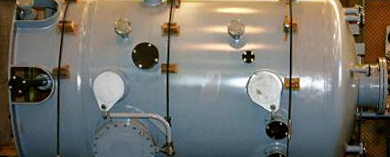
Operational performance in modern oil and gas facilities relies on equipment that remains structurally sound under demanding conditions. Process reliability improves significantly through routine pressure vessel inspection, allowing operators to detect wear before failures occur. Facilities meeting high mechanical integrity standards gain stronger output predictability and safer long-term operations.
Performance Enhancements Through Rigorous Assessment
High-output environments expose vessels to fluctuating pressures and chemical interactions that gradually impact material integrity. Engineers implementing structured assessment procedures achieve earlier identification of wall thinning, weld fatigue, or thermal distortion that may affect operating efficiency. Maintenance planning becomes more strategic once condition trends are clearly charted.
Thermal gradients, corrosive media, and cyclic loading influence the lifespan of pressure-retaining components. Predictive maintenance programs, therefore, depend on accurate documentation, robust testing methodology, and specialist evaluation that aligns with Australian standards. Facilities adopting consistent data-driven procedures maintain stronger resilience across production cycles.
Modern Pressure Vessel Inspection Techniques
This systematic approach to checking vessel health must combine regulatory adherence with advanced engineering skills. Finding early signs of material failure, such as cracking or localised pitting, is vital for preventing a complete structural collapse.
Crucial Non-Destructive Testing (NDT) techniques:
• Ultrasonic Testing (UT): Precise wall thickness measurements are taken to find corrosion and erosion, giving specific data on material loss.
• Magnetic Particle Testing (MPT): This process reveals small surface or near-surface faults in magnetic metals, essential for identifying early fatigue cracks in welded areas.
• Radiographic Testing (RT): High-resolution internal images are created to detect subsurface defects, such as pockets of air or slag trapped inside complex welds.
• Visual Inspection (VT): Performed by certified inspectors, the vessel’s external condition is confirmed, noting any deformation, coating damage, or small leaks from joints.
• Time-of-Flight Diffraction (TOFD): Accurately sizing and locating critical defects is achieved using this highly sophisticated ultrasonic method, providing precise geometry for fitness-for-service evaluations.
Technical Inspection Elements For 2026 Operations
Reliable compliance outcomes for pressure vessel inspection require a structured evaluation that captures both external and internal vessel conditions. Oil and gas operators strengthen performance by incorporating the following technical inspection elements.
Core assessment components include:
• Surface Evaluation: Identify early surface flaws that may progress into structural discontinuities under pressure or thermal cycling.
• Weld Integrity Review: Examine heat-affected zones and weld geometry to confirm that joints retain adequate strength and load-carrying capacity.
• Corrosion Mapping: Measure and visualise metal loss patterns to determine how corrosion may influence long-term mechanical performance.
• Internal Visual Assessment: Detect scaling, pitting, or internal deposits that can restrict flow, reduce efficiency, or compromise structural reliability.
• Dimensional Monitoring: Verify roundness, alignment, and critical tolerances to ensure the vessel remains consistent with engineering design specifications.
See the Review on Non-Destructive Techniques for Early Flaw Detection for advanced industry research and deeper technical guidance that supports compliant pressure equipment evaluation.
Strengthening Operational Outcomes In 2026
For the demanding 2026 operational cycle, reliable maintenance is crucial for ongoing success in this highly regulated sector.
Driving Safer and More Efficient Operations
Fusion-Weld Engineering supports oil and gas facilities preparing for 2026 performance demands, where our pressure vessel inspection remains essential for safe operation. Our services reinforce safer, more efficient processing systems by guiding operators through dependable engineering support. This practical approach helps plants maintain stability and reduce downtime as equipment loads increase.
Contact us for tailored engineering support that strengthens long-term reliability.
Related Blog Article: Pressure Vessel Inspection: Maintaining Critical Water Heating Infrastructure
Contact Details
Fusion - Weld Engineering Pty Ltd
ABN 98 068 987619
1865 Frankston Flinders Road,
Hastings, VIC 3915
Ph: (03) 5909 8218
Optimized by NetwizardSEO.com.au
Recent Posts
- Process Plant Fabrication: Modular Industrial Solutions for Oil and Gas Applications
- Pressure Equipment Compliance in Melbourne: A Practical Guide for Plant Managers
- Shell & Tube Heat Exchangers: Engineering, Maintenance and Lifecycle Performance Considerations
- Large-Scale Pressure Vessel Fabrication: Handling Vessels Up to 200 Metric Tons
- Process Skid Fabrication Melbourne: Modular Plant Solutions for 2026 Projects
- Pressure Vessel Inspection: Ensuring Peak Efficiency in 2026 Oil & Gas Operations
- Pressure Vessel Fabrication: Engineering Efficiency for 2026 Petrochemical Projects
- Heat Exchanger Maintenance in Melbourne: Minimising Risk in Power Generation Facilities
- Compressed Hydrogen Storage Vessels: Material Selection, Design & Australian Standards
- Welding QA/QC in Oil & Gas Pressure Vessel Fabrication – Ensuring Code Compliance
- AS1210 vs ASME VIII Pressure Vessel Code: Key Differences for Australian Projects
- Mitigating Hydrogen-Induced Cracking in Pressure Vessels: Engineering and Material Strategies
Posts 2026
- Process Plant Fabrication: Modular Industrial Solutions for Oil and Gas Applications
- Pressure Equipment Compliance in Melbourne: A Practical Guide for Plant Managers
- Shell & Tube Heat Exchangers: Engineering, Maintenance and Lifecycle Performance Considerations
- View all articles…
Posts 2025
- Compressed Hydrogen Storage Vessels: Material Selection, Design & Australian Standards
- Welding QA/QC in Oil & Gas Pressure Vessel Fabrication – Ensuring Code Compliance
- View all articles…
Posts 2024
- Large Process Vessels: Optimising the Design for Maximum Efficiency [2025]
- Pressure Equipment Management System Installation: Detect Equipment Faults Early
- View all articles…
Posts 2023
- Pressure Piping System Inspection: A Gift of Safety for the Holidays
- Deaerator Inspections by Fusion-Weld Engineering and How They Reduce System Downtime
- View all articles…
Posts 2022
- How Fusion Weld Keeps Up With AS-NZS ISO 9001:2008 Standard
- Boiler Equipment Safety Inspection During the Summer Season
- View all articles…
Posts 2021
- Avoid These Factors and Practices that Contribute to Sealing Damage in Pressure Vessels
- Do's And Don'ts Of Industrial Boiler Inspection And Maintenance From Fusion-Weld
- View all articles…
Posts 2020
- What are the Risks and Hazards Involved in Pressure Vessel Equipment?
- How to Know if Your Pressure Equipment Needs Repair or Replacement?
- View all articles…
Posts 2019
- Factors that Contribute to Pressure Vessel Failure
- Pressure Vessel Regulations in Australia: What are the Mandatory Requirements?
- View all articles…
Posts 2018
- Pros and Cons of Spherical vs. Cylindrical Pressure Vessels
- What are the Different Hazard Levels in Pressure Vessels?
- View all articles…
Posts 2017
- Transportable Pressure Vessels: The Importance of Inspection and Safety Checks
- Fracture Mechanics and Stress Analysis of Cracks in Pressure Vessels
- View all articles…
Posts 2016
Posts 2015
- What Are Deaerators & Feedwater Vessels?
- Precautions and Safety for Compressed Air Receiver Vessels
- View all articles…
Posts 2014
- Demonstrating In-process Inspection Procedures
- Static Grounding Practices and Standards
- View all articles…