
- (03) 5909 8218
- enquiry@fusionweld.com.au
Shell & Tube Heat Exchangers: Engineering, Maintenance and Lifecycle Performance Considerations
March 20, 2026
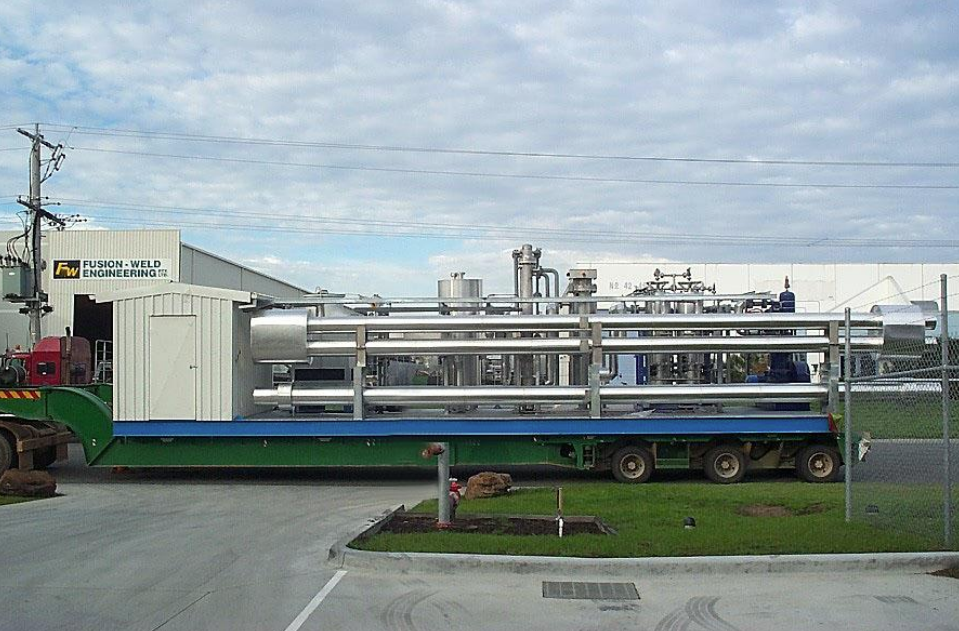
Improve thermal reliability with shell and tube heat exchangers by Fusion-Weld Engineering for global fabrication, maintenance, and lifecycle support.
Industrial heat-transfer systems demand equipment that performs reliably under continuous mechanical and thermal stress. Shell and tube heat exchangers continue to be widely adopted due to their structural robustness and adaptability across demanding process environments. Long-term efficiency depends on disciplined engineering, informed maintenance planning, and lifecycle-focused fabrication decisions.
Shell and Tube Heat Exchangers in Industrial Thermal Systems
Shell and tube heat exchangers are engineered to operate under elevated pressures, high temperatures, and fluctuating flow conditions. Their modular design allows scalability while maintaining mechanical stability across industrial applications. Engineering precision directly influences thermal efficiency, operating safety, and service life.
Design considerations extend beyond thermal performance alone. Mechanical allowances for expansion, vibration control, and corrosion resistance determine long-term reliability. Poor early-stage engineering often leads to fouling, premature wear, and avoidable maintenance intervention.
Engineering Factors That Influence Long-Term Performance
Effective exchanger performance is established through informed design and fabrication decisions. Several engineering elements shape durability, compliance, and serviceability across operational life.
• Material Compatibility: Alloy selection must withstand corrosion, erosion, and chemical exposure across all operating conditions, reducing degradation and extending service intervals.
• Thermal Expansion Management: Controlled expansion allowances minimise tube stress, joint fatigue, and shell distortion during temperature cycling.
• Flow Distribution Design: Balanced flow paths improve heat-transfer efficiency while limiting pressure loss and uneven tube loading.
• Fabrication and Welding Quality: Precision welding and certified inspection processes preserve structural integrity and compliance with pressure equipment standards.
• Maintenance Accessibility: Practical design layouts enable efficient inspection, cleaning, and retubing without unnecessary downtime or disassembly complexity.
Industry guidance on pressure equipment inspection and lifecycle management is outlined in AS/NZS 3788: Pressure Equipment—In-Service Inspection, which supports compliant design, maintenance, and operational safety practices across Australian facilities.
Maintenance Planning Across Operational Life Cycles
Maintenance strategies should reflect operating conditions rather than fixed schedules. Shell and tube heat exchangers perform more reliably when inspection and cleaning intervals are based on fluid properties, fouling rates, and operating temperatures. Proactive maintenance reduces efficiency losses and limits unplanned outages.
Lifecycle planning also accounts for refurbishment and component replacement as process demands evolve. Retubing, shell repairs, and material upgrades allow assets to remain compliant and efficient without full replacement. Accurate inspection records and condition monitoring support informed long-term asset management.
Global Fabrication and Lifecycle Support Solutions
Long-term reliability in shell and tube heat exchangers depends on fabrication accuracy, inspection discipline, and lifecycle support that extends beyond commissioning.
Fusion-Weld Engineering provides engineered heat-transfer solutions supported by fabrication, inspection, and lifecycle services delivered globally. Our manufacturing processes align with international standards to ensure consistency, compliance, and performance across diverse industrial environments.
Contact us to engage with a trusted engineering partner delivering proven heat-exchange solutions worldwide.
Related Blog Article:
Heat Exchanger Maintenance in Melbourne: Minimising Risk in Power Generation Facilities
Shell & Tube Heat Exchangers: Improve Thermal Control & Energy Recovery in Petrochemical & Pharmaceutical Plants
Contact Details
Fusion - Weld Engineering Pty Ltd
ABN 98 068 987619
1865 Frankston Flinders Road,
Hastings, VIC 3915
Ph: (03) 5909 8218
Optimized by NetwizardSEO.com.au
Recent Posts
- Process Plant Fabrication: Modular Industrial Solutions for Oil and Gas Applications
- Pressure Equipment Compliance in Melbourne: A Practical Guide for Plant Managers
- Shell & Tube Heat Exchangers: Engineering, Maintenance and Lifecycle Performance Considerations
- Large-Scale Pressure Vessel Fabrication: Handling Vessels Up to 200 Metric Tons
- Process Skid Fabrication Melbourne: Modular Plant Solutions for 2026 Projects
- Pressure Vessel Inspection: Ensuring Peak Efficiency in 2026 Oil & Gas Operations
- Pressure Vessel Fabrication: Engineering Efficiency for 2026 Petrochemical Projects
- Heat Exchanger Maintenance in Melbourne: Minimising Risk in Power Generation Facilities
- Compressed Hydrogen Storage Vessels: Material Selection, Design & Australian Standards
- Welding QA/QC in Oil & Gas Pressure Vessel Fabrication – Ensuring Code Compliance
- AS1210 vs ASME VIII Pressure Vessel Code: Key Differences for Australian Projects
- Mitigating Hydrogen-Induced Cracking in Pressure Vessels: Engineering and Material Strategies
Posts 2026
- Process Plant Fabrication: Modular Industrial Solutions for Oil and Gas Applications
- Pressure Equipment Compliance in Melbourne: A Practical Guide for Plant Managers
- Shell & Tube Heat Exchangers: Engineering, Maintenance and Lifecycle Performance Considerations
- View all articles…
Posts 2025
- Compressed Hydrogen Storage Vessels: Material Selection, Design & Australian Standards
- Welding QA/QC in Oil & Gas Pressure Vessel Fabrication – Ensuring Code Compliance
- View all articles…
Posts 2024
- Large Process Vessels: Optimising the Design for Maximum Efficiency [2025]
- Pressure Equipment Management System Installation: Detect Equipment Faults Early
- View all articles…
Posts 2023
- Pressure Piping System Inspection: A Gift of Safety for the Holidays
- Deaerator Inspections by Fusion-Weld Engineering and How They Reduce System Downtime
- View all articles…
Posts 2022
- How Fusion Weld Keeps Up With AS-NZS ISO 9001:2008 Standard
- Boiler Equipment Safety Inspection During the Summer Season
- View all articles…
Posts 2021
- Avoid These Factors and Practices that Contribute to Sealing Damage in Pressure Vessels
- Do's And Don'ts Of Industrial Boiler Inspection And Maintenance From Fusion-Weld
- View all articles…
Posts 2020
- What are the Risks and Hazards Involved in Pressure Vessel Equipment?
- How to Know if Your Pressure Equipment Needs Repair or Replacement?
- View all articles…
Posts 2019
- Factors that Contribute to Pressure Vessel Failure
- Pressure Vessel Regulations in Australia: What are the Mandatory Requirements?
- View all articles…
Posts 2018
- Pros and Cons of Spherical vs. Cylindrical Pressure Vessels
- What are the Different Hazard Levels in Pressure Vessels?
- View all articles…
Posts 2017
- Transportable Pressure Vessels: The Importance of Inspection and Safety Checks
- Fracture Mechanics and Stress Analysis of Cracks in Pressure Vessels
- View all articles…
Posts 2016
Posts 2015
- What Are Deaerators & Feedwater Vessels?
- Precautions and Safety for Compressed Air Receiver Vessels
- View all articles…
Posts 2014
- Demonstrating In-process Inspection Procedures
- Static Grounding Practices and Standards
- View all articles…